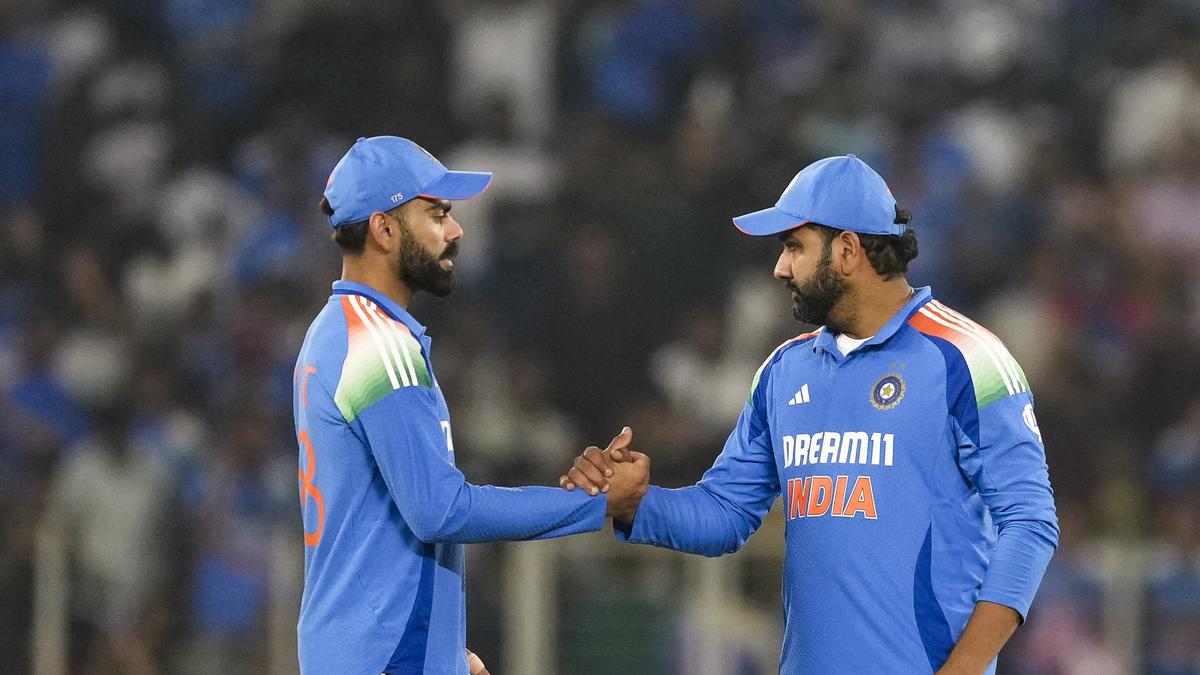
India A tours rarely draw widespread attention. Yet in the current context, the omission of Rohit Sharma and Virat Kohli from the three-match One-Day series against Australia A has sparked speculation: are India’s two modern stalwarts gradually being phased out?
Such conjecture may be premature, but it underlines the transitional phase Indian cricket has entered since their retirements from T20Is and Tests. Neither has hinted at stepping away from ODIs — historically their most productive format — and the numbers suggest performance is not the issue.
India has not played an ODI since winning the Champions Trophy earlier this year under Rohit’s captaincy, a campaign in which Kohli (218 runs) and Rohit (180) finished as the team’s second- and fourth-highest run-scorers. Across the last two years, only Shreyas Iyer (1200) and Shubman Gill (1184) have scored more than Kohli (1154) and Rohit (1137). By any statistical measure, their contributions remain substantial.
The rationale, then, seems strategic rather than form-driven. India is scheduled to play 24 ODIs before the 2027 World Cup in South Africa, with half of those games in challenging conditions — Australia later this year, England in 2026, and New Zealand soon after. That schedule offers management the chance to identify and develop successors for key batting roles.
India A tours have long served as proving grounds for players on the brink of senior selection. Including Rohit and Kohli in Kanpur would have squeezed out opportunities for younger options. Abhishek Sharma, Rajat Patidar, Tilak Varma, and Ayush Badoni are all in the mix for top-order roles, and this series provides a controlled setting to test their readiness in the 50-over format.
ALSO READ | The long goodbye of a generation that defined Test cricket
It is reasonable to argue that both veterans, absent from competitive cricket since the IPL and from ODIs since March, might have benefitted from time in the middle. Yet their exclusion points to a broader policy direction. Under Gautam Gambhir, the current management has consistently emphasized dismantling a culture of individual-centric selection.
This does not necessarily mean that Rohit and Kohli have been written out of long-term World Cup plans. Rather, it reflects an effort to ensure that when their eventual exits come, the transition is smooth and the team is not left exposed. By 2027, Kohli will be touching 39 and Rohit 40, ages at which sustained international output becomes increasingly difficult even for the finest players.
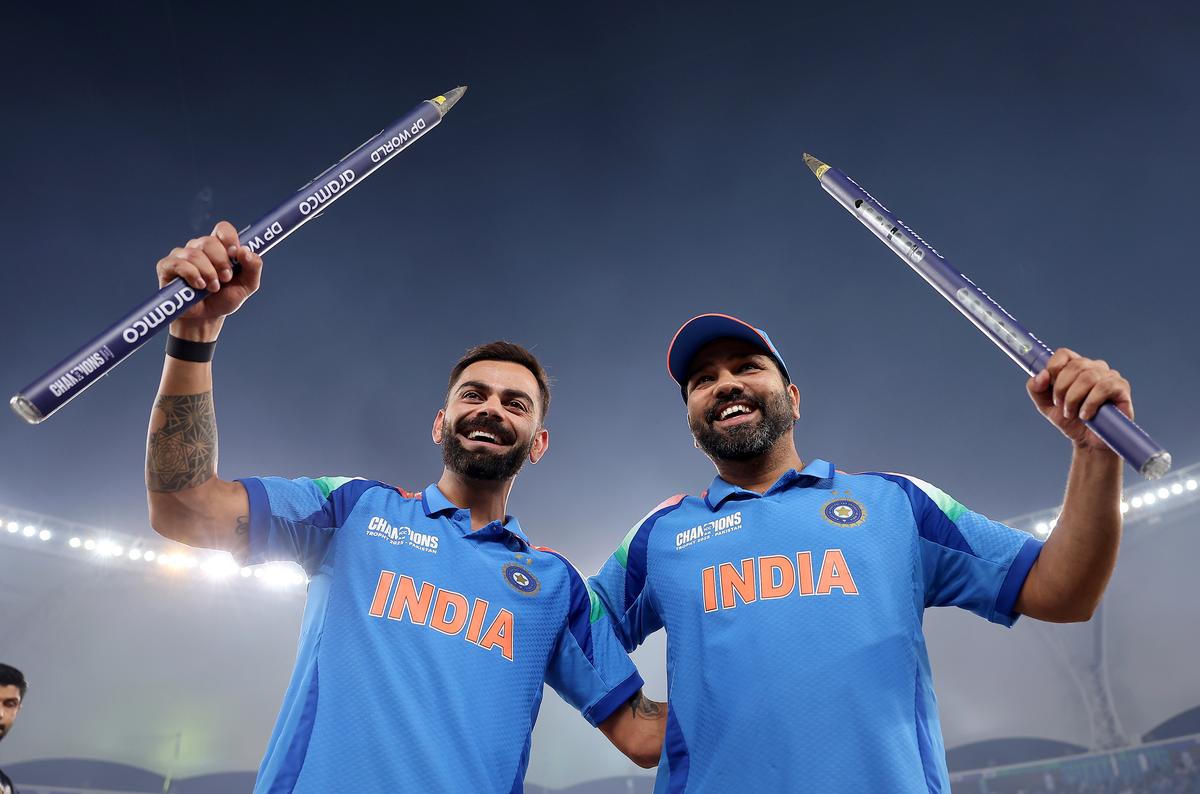
Virat Kohli and Rohit Sharma celebrate after winning the ICC Champions Trophy.
| Photo Credit:
Getty Images

Virat Kohli and Rohit Sharma celebrate after winning the ICC Champions Trophy.
| Photo Credit:
Getty Images
For now, their stature remains intact. But India’s succession planning has clearly begun. Whether by design or by default, Indian cricket has entered the Rohit-Kohli afterglow. The only question is how long the light lasts.
Published on Sep 16, 2025