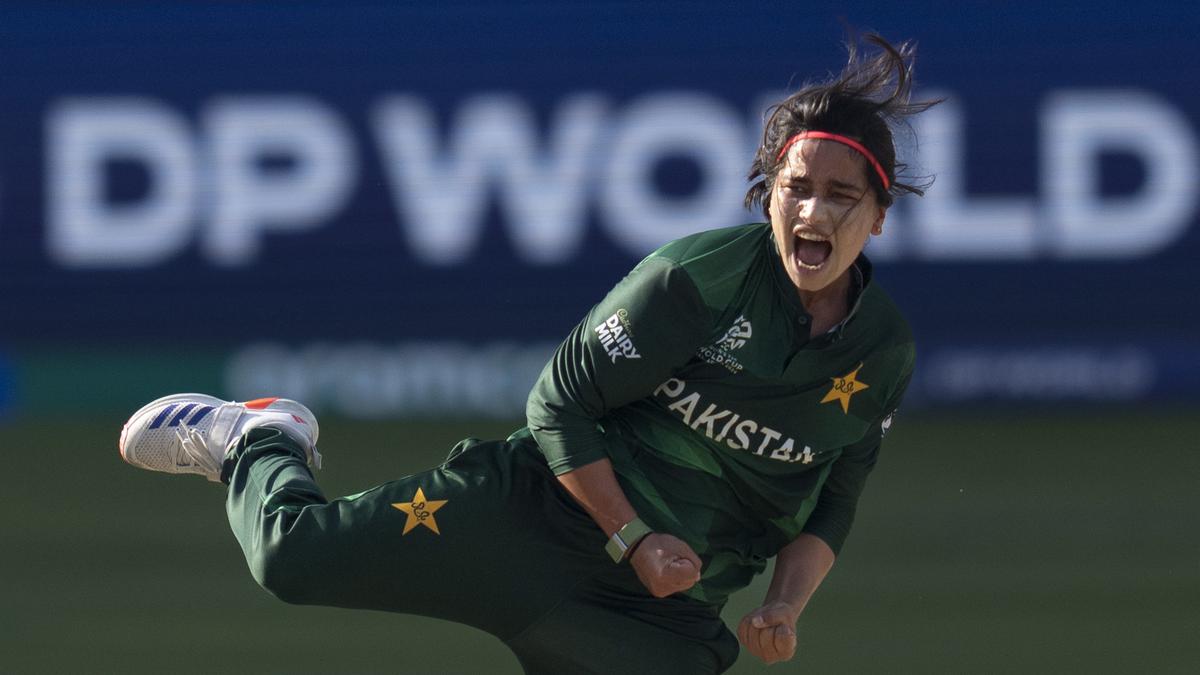
Under a dimming Colombo sky, the Pakistan cricket team geared up for its final practice ahead of its Women’s ODI World Cup 2025 opener. There were plenty of laughs and chatter as the players split between field drills and net sessions. The mood straightened up when they saw former captain Sana Mir making her way towards them. A chat and a few hugs quickly turned into a huddle and a pep talk.
It is safe to assume that the squad’s positivity going into a big assignment will help its old commander breathe a little easier.
Pakistan made the 50-over showpiece by virtue of a charmed qualifier where the side went unbeaten. In the 12 months between the 2024 T20 World Cup, where the side exited in the group stage with a solitary win in four games, and this event, the team has played 11 matches. Three of those were T20Is, and five were part of the Qualifiers.
Only one bilateral series was slotted in, against South Africa, but in the crucial weeks leading to the tournament. Though it lost 1-2, the side was buoyed by batters finding form, disciplined bowling, and an improved fielding display. All this under a talismanic skipper, Fatima Sana, on whose 23-year-old shoulders the responsibility of galvanising this unit has been placed.
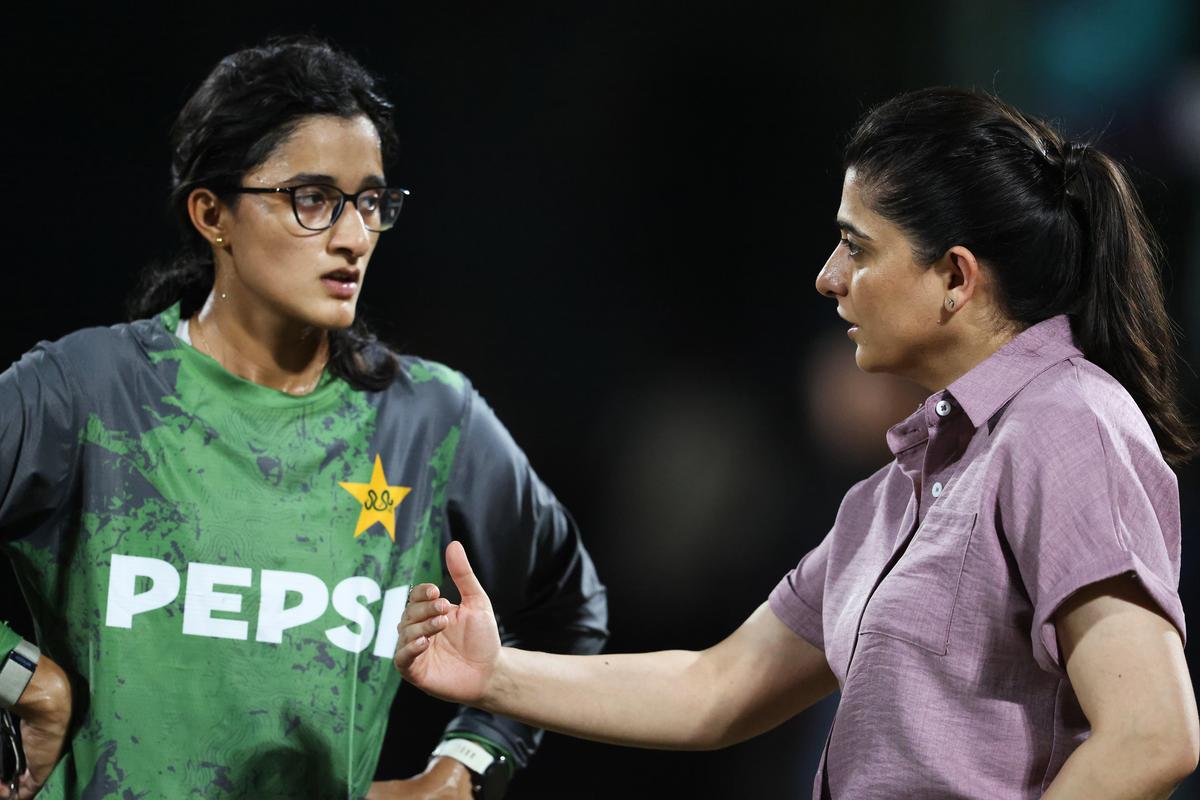
It is safe to assume that the squad’s positivity going into the ODI World Cup will help its old commander, Sana Mir, breathe a little easier.
| Photo Credit:
Getty Images

It is safe to assume that the squad’s positivity going into the ODI World Cup will help its old commander, Sana Mir, breathe a little easier.
| Photo Credit:
Getty Images
Leading from the front
“From day one, I thought she was exceptional, but she is surpassing every expectation,” Mir had told Sportstar during the T20 World Cup in Dubai, watching along from the broadcaster’s box as a grieving Fatima returned after her father’s funeral to lead the side in its final, albeit inconsequential, league fixture.
“I first saw her at a domestic tournament. Her optimism immediately stood out, even though she was running drinks for that fixture. I picked her for my domestic side (Zarai Taraqiati Bank) and entrusted her with new ball duties,” Mir remembered.
When Fatima made the Pakistan team as an injury replacement for Diana Baig in 2019, Mir was her roommate and held her hand throughout. From getting to grips with international cricket to being responsible for herself when out on tours, Fatima was a quick learner.
“The biggest thing about her is that spark, to be able to give anything a shot. In her, Pakistan has found something very special. Not just as a player but as a leader as well.”
The history of the women’s game in the nation is dotted with pathbreaking women, right from Shaiza and Sharmeen Khan to Mir and Bismah Maroof, and now Fatima. But what can enigmatic leaders do alone for a nation’s sport in a world that increasingly favours foolproof systems and a certain industrial quality to operation?
Former Pakistan cricketer and selector-turned broadcaster Marina Iqbal, who is currently in the remote northern parts of the country on a scouting assignment, underlines how administrative instability has pushed the country back.
“It’s a performance-based industry. A few years ago, we had a more stable domestic calendar. Now, with changes in the higher management, things have gone downwards. There are still a few positives, though,” she told this publication.
Central and domestic contracts and a recent hike to the main retainers have pushed financial security for players. Emerging players have been absorbed into the domestic contract pool. Under-19 tournaments are being held regularly to cater to the ICC’s push for the age group World Cup. There are pathways through school cricket. The skeleton of a structure exists, but it has not been able to put on much muscle.
“We’ve been asking for the red ball format to be introduced. All other big nations have it. The game you put on show there then reflects on your systems underneath.”
“Women’s cricket in particular has to start from zero. That is the biggest challenge,” she exclaimed.
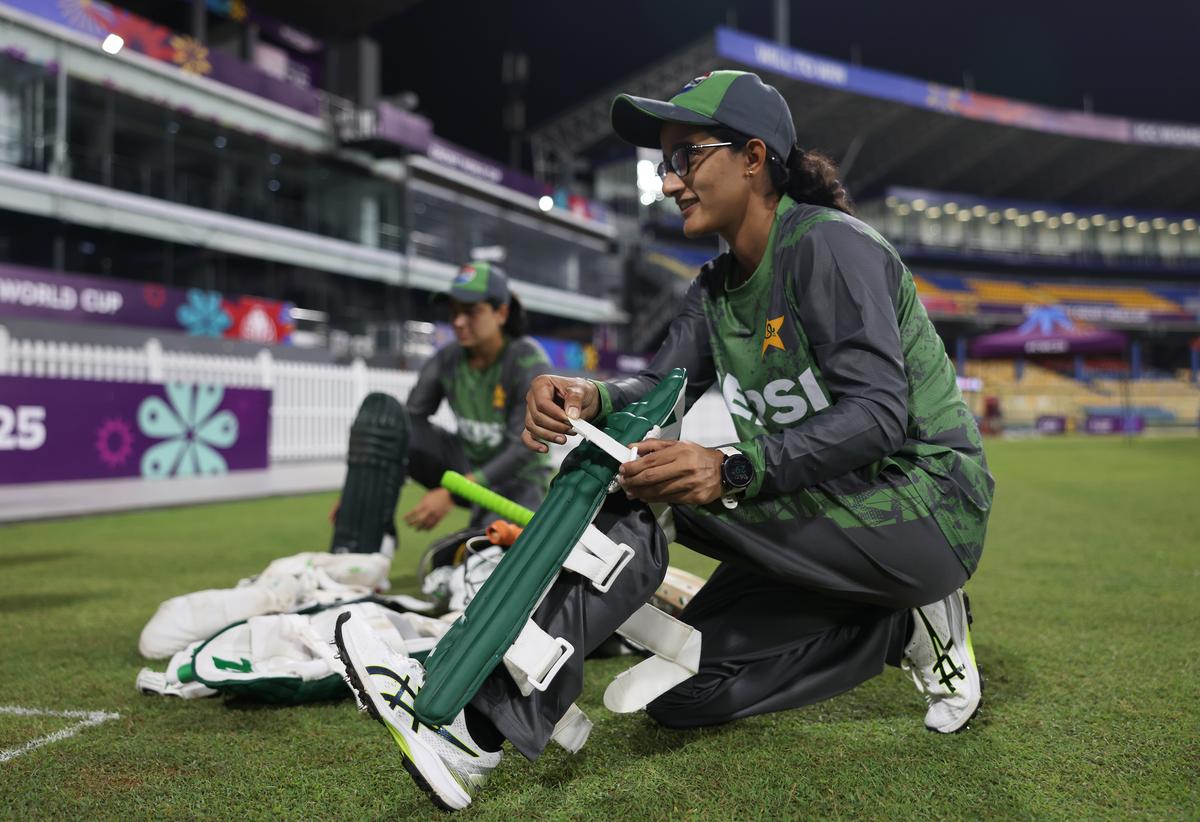
Muneeba Ali can strike the ball well coming from a part of the world where power-hitting deficiencies have long been linked to the build of players.
| Photo Credit:
Getty Images
Muneeba Ali can strike the ball well coming from a part of the world where power-hitting deficiencies have long been linked to the build of players.
| Photo Credit:
Getty Images
The problem of physicality
For long, subcontinent cricketers have grappled with the inherent physical disadvantages when compared to their Tasman or English counterparts. Express pacers are hard to find because tall women like Jhulan Goswami are the exception, not the norm. Power-hitting deficiencies have long been linked to the build of players from this part of the world.
Pakistan’s sternest warning to improve its range-hitting, strike rate, and tempo came at the T20 World Cup last year, when players unanimously agreed that the side’s ability to accelerate scoring was on ventilator support.
“Individually, boundary hitting has improved for this side, but in comparison with others, we’re still not at par. Resources are limited. Game time is not where it should be. Pakistan players don’t get to play as many leagues,” Mir pointed out.
What Chamari Athapaththu is in being the face of Sri Lanka in the global franchise circuit, Fatima is to Pakistan. They have evolved as a result, but the trickle down is too small to be system-altering.
“At the international level, it’s about skill, not just strength. Your frame shouldn’t matter if you can generate pace and power,” Mir explained.
Across the border, Jemimah Rodrigues presents an ideal case study. She has improved her ground hitting and placement to keep her strike rate up, moving away from the draining trap of attempting sixes that are incongruent to her capacity.
The belief barrier
“Early on, we had a few players, like Nida Dar and Aliya Riaz, who were assigned this role. Natalia Pervaiz is that talent for us now. She, with Fatima, can use the long handle and hit big, but they still lack peak power. That barrier is as much mental as it is physical,” Iqbal suggested.
“Players usually say it’s hard for them to hit sixes at will. It’s an area Pakistan lacks in especially going into the death overs.
“Muneeba (Ali) and Sidra (Ameen) can strike well too, the former the more aggressive option. But I don’t think she can turn into a power hitter when required. Sidra is more of an anchor,” she added.
Now and then, scouts head to the mountainous north and northwest to look for bigger, stronger players who could produce fireworks.
Also read | On-the-rise Pakistan, Bangladesh eye winning start in Colombo
For instance, the Pakistan Cricket Board announced trials in remote areas like Sost in Gilgit-Baltistan, the last town on the high-altitude Karakorum Highway that connects Pakistan and China, last year.
“We are now more purposeful about selections. We had an amazing batter called Ayesha Naseem. She unfortunately left the game (at the age of just 18, for religious reasons), but she was built differently,” Mir remembered.
She scouted Ayesha when she visited her hometown Abbottabad to conduct U-16 trials.
“In the north of Pakistan, you have players of this build. But facilities are negligible. Girls either come to Lahore or Karachi to find an academy or college to train at. That bridge is hard to build too, so we usually end up scouting from Lahore, Karachi. But talents from Punjab and Sindh will be different,” Mir added.
Iqbal labelled scouting expeditions as a ‘sweet and sour experience.’
“Sweet because I am travelling to majorly remote areas where we don’t usually go, particularly to find female talent. Sour because there are no pathways or stability to help them come through,” she noted.
If bringing talent out is an issue, Iqbal believes an immediate priority needs to be getting resources to streamline talent identification. Coaches, tournaments, medical and scientific help are all key, she said.
Pakistan has traditionally been a cradle for pace mavericks in the men’s game, but the same has not been the case in the women’s scene. Mir believes the obsession with speed isn’t the ideal way to approach fast bowling stock.
“It’s important to understand that out-and-out pace might not be instantly available. So you need to develop medium pacers. Look at Megan Schutt and Renuka Singh Thakur. They don’t have striking speed but have a lot of control and can swing the ball,” she explained.
She lists several current and former players like Waheeda Akhtar, Masooma Jafri, Tasmia Rubab, Sumaiya Siddiqi and Asmavia Iqbal when highlighting a need for change in coaching perspectives.
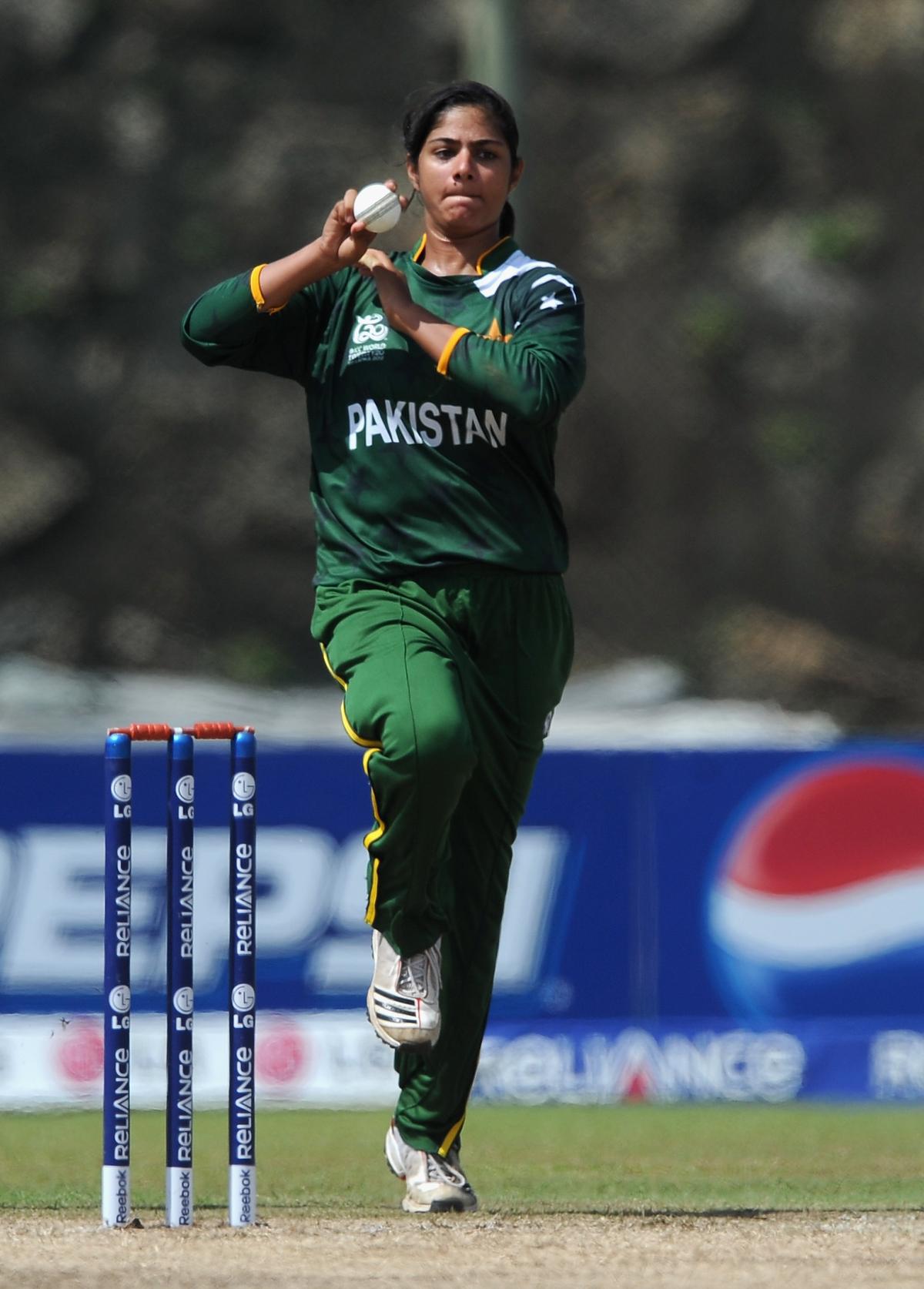
Former Pakistan cricketer and selector-turned broadcaster Marina Iqbal underlines how administrative instability has pushed the country back.
| Photo Credit:
ICC via Getty Images
Former Pakistan cricketer and selector-turned broadcaster Marina Iqbal underlines how administrative instability has pushed the country back.
| Photo Credit:
ICC via Getty Images
Keeping up with change
What the gap does is deepen the dependence on experience. It isn’t the worst thing to do. Australia is doing that, so is England, India, and Sri Lanka.
“Nashra (Sandhu), Sadia (Iqbal), and Diana have all been performing well for a while now. Sadia recently rose to number one, and Nashra managed a six-fer against South Africa. All this has boosted the confidence of the team because it relies heavily on these experienced campaigners,” Iqbal noted.
This is particularly significant given the spin-friendly conditions at the R. Premadasa Stadium, where the side will play all its group games. While that props the team up for an event like the World Cup, it only stresses the importance of bolstering the assembly line for the cycle to follow.
It is also a wake-up call for athlete support systems to catch up. For Mir, stints with the now-defunct Fairbreak Invitational – a private tournament sanctioned by the ICC, proved eye-opening.
“I don’t see an improvement (in sports science). Constant leadership changes mean support staff also kept changing. It doesn’t help hold people accountable. Given that the number of female cricket or sports teams in Pakistan is still not where it should be, exposure for physios in understanding the requirements for female athletes is still not at its best,” Mir said.
The elusive Women’s PSL
Much like the Indian ecosystem was pinning its hopes on the Women’s Premier League to be the harbinger of change, a women’s variant of the Pakistan Super League has long been on the wishlist.
“When I was in the administration, we had a very detailed talk with Najam Sethi (former PCB chief), and he was very keen on starting Women’s PSL and what he did for the time being was have a few exhibition matches among three teams that really benefited the women cricketers. When Najam Sethi was removed, we had to begin from scratch,” Iqbal recalled.
“The exposure young players had sharing dressing rooms with international cricketers like Danni Wyatt-Hodge made immense difference, and we’ve seen that happening globally with Big Bash, the Kia Super League, the Hundred, and the WPL.”
“Lahore Qalandars, the PSL team I am working with, are very keen on entering the women’s setup. I hope others follow.”
Mir stressed the importance of persisting with investment.
“The most important thing is to put in resources and bigger budgets for women’s cricket. Treat them with the same respect you’d give the senior men’s team and the U19s. The mindset usually is, ‘Look at their performances. Why should we invest?’ But it needs to be the other way around,” she said.
“We spend millions on men, and still there are lapses. We need to be patient.”
She also believes simplicity in decision-making is needed. Pakistan is a late entrant into the women’s ecosystem, only as late as 1997. Branding it is as important as developing it.
“We don’t know what’s happening next month, to be honest, and that’s a sad state of affairs for all stakeholders,” Mir said.
“We see too many quick decisions being taken in a short period of time. We need to calm down and stick to the basics. In other countries, you see domestic structures being run for 50 years. We have been changing our domestic structure for men so much in just the last five, six years. It doesn’t allow any history or legacy to form. That is crucial to building the cricketing culture in this nation,” she added.
Published on Oct 02, 2025