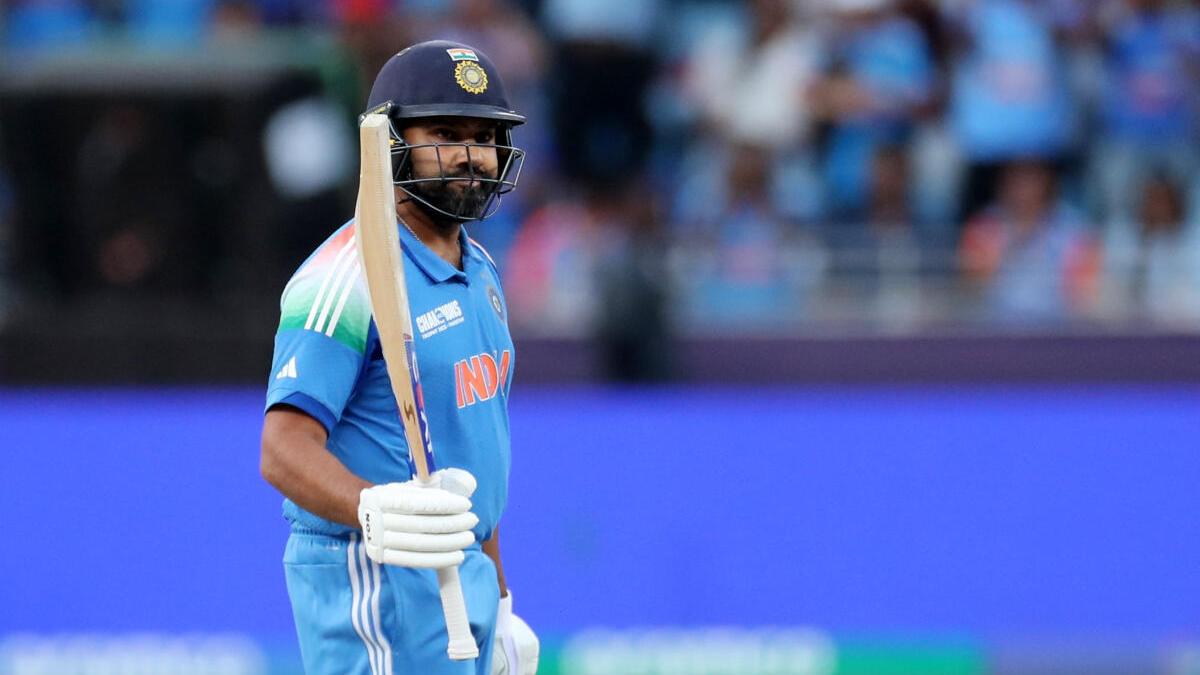
When Rohit Sharma assumed full-time charge of India’s One-Day International side in 2021, succeeding Virat Kohli, he inherited not just a team but an atmosphere — of intensity, scrutiny, and unfinished business.
Where Kohli had thrived on raw animation, Rohit was different: deliberate in word, lighter in gesture, heavier on trust. He did not need to fill the room with noise.
His tenure produced two defining campaigns. The 2023 World Cup in India was both triumph and torment. For six weeks, India played with unusual clarity. At the top, Rohit led in a way that could almost be mistaken for abandon: pulling, cutting, driving with the ease of a man who had decided that leading by example meant scoring at a tempo no one expected. His 29-ball 47 against New Zealand in the semifinal was emblematic: not a big score, but a fearless burst that set the tone. India reached the final undefeated, only to find Australia waiting, as it so often does, at the point where dreams thin into dust.
The defeat in Ahmedabad did not erase the journey, but it hardened the questions. Was India too conservative in the final? Could the middle-order have played with more intent? These criticisms linger, as they tend to with Indian captains. Yet, when placed against the arc of leadership that runs from M.S. Dhoni to Kohli to Rohit, the contrasts sharpen. Dhoni taught India to win without panic. Kohli turned intensity into a weapon. Rohit offered assurance, proof that dominance could be measured, not manic.
The results gave substance to that mood. India won 23 of its 24 completed matches across the last three ICC men’s limited-overs tournaments, the lone blemish being the 2023 final. It went unbeaten through the 2024 T20 World Cup and the 2025 Champions Trophy. One more win in Ahmedabad, and India would have held all three ICC trophies together, something no side has achieved.
This was also an era when the 50-over format itself was in question, increasingly dwarfed by T20Is. Rohit’s India refused to let ODIs slip into irrelevance. His method, frontloading aggression in the PowerPlay, then trusting depth and tempo to carry through, kept the format distinct, alive, and thrilling at a time when its identity risked being blurred.
The statistical markers underline the point. With 27 victories at ICC men’s events, Rohit sits behind only Dhoni and Ponting, names synonymous with dominance. His Champions Trophy win was his third ODI triumph in a multi-nation tournament, alongside Asia Cup titles in 2018 and 2023. And across his stint, his win-loss ratio in ODIs is second only to Clive Lloyd’s among captains who led in 50 or more matches.
Now the armband passes to Shubman Gill, but Rohit remains. His runs are not done, nor his influence diminished. In Gill’s first steps as captain, Rohit’s presence will be less about directing traffic and more about guarding the culture he built: calm under scrutiny, belief under pressure, and faith in method. The leadership baton has passed, but the ember still glows.
Published on Oct 04, 2025