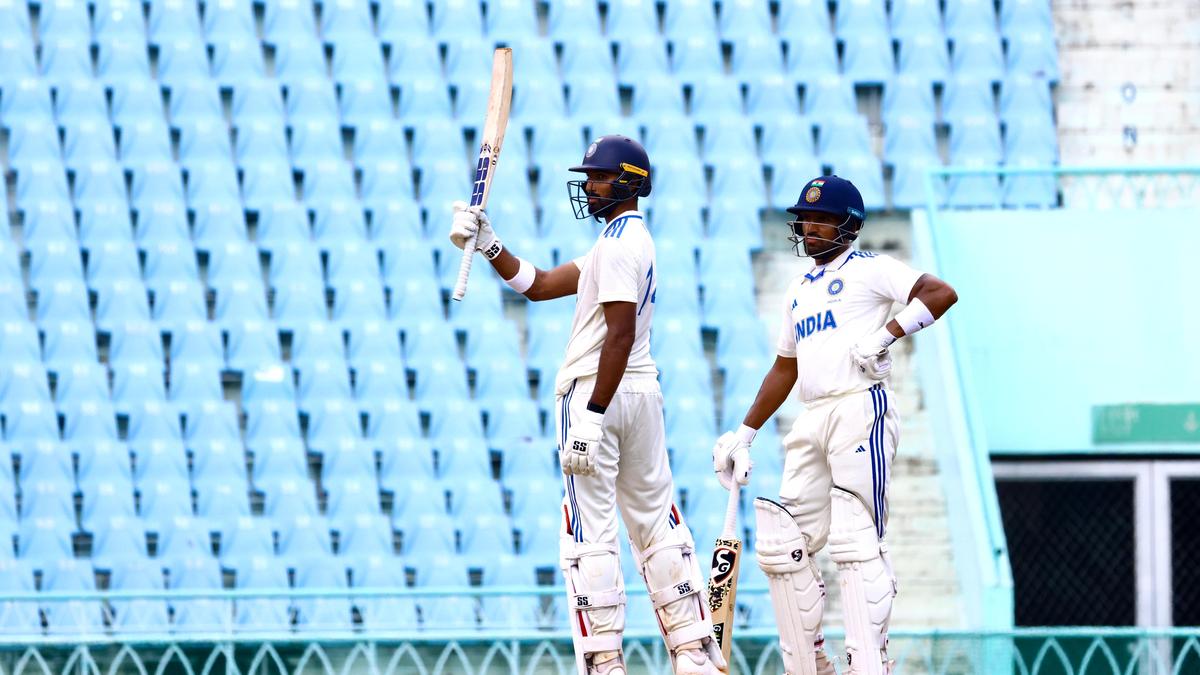
Futures, vacancies, and subplots within the Indian Test squad were the main talking points when India A hosted Australia A for two four-day games in Lucknow.
For some, like KL Rahul, Mohammed Siraj, Nitish Kumar Reddy, and Dhruv Jurel, the series was primarily about valuable game time. For others, it was an audition — a chance to stake a claim for the upcoming four home Tests against West Indies and South Africa.
Iyer’s absence, Padikkal’s gain
The biggest headline, however, was Shreyas Iyer’s unavailability for red-ball cricket over the next six months due to recurring back issues. Named captain for the series, Iyer could have made a strong case for himself in the middle order. Instead, he lasted just 13 balls in the opening game before flying home.
“Having undergone back surgery in the UK and managed his recovery well, he has recently experienced recurring back spasms and stiffness while playing the longer format. He wishes to utilise this period to build endurance, body resilience, and work on his fitness,” the BCCI explained.
Iyer’s absence opened the door for Devdutt Padikkal, and the Karnataka left-hander stepped through with authority. His fluent 150 in the first match was more than just runs — it was a statement of temperament and patience. He mixed crisp cover drives with watchful leaves outside off stump and, most importantly, showed the patience to bat long. By the time the selectors announced India’s squad for the West Indies Tests, Padikkal’s name had been firmly cemented. “We feel Padikkal offers a little bit more [than Karun Nair] at this point,” chief selector Ajit Agarkar said.
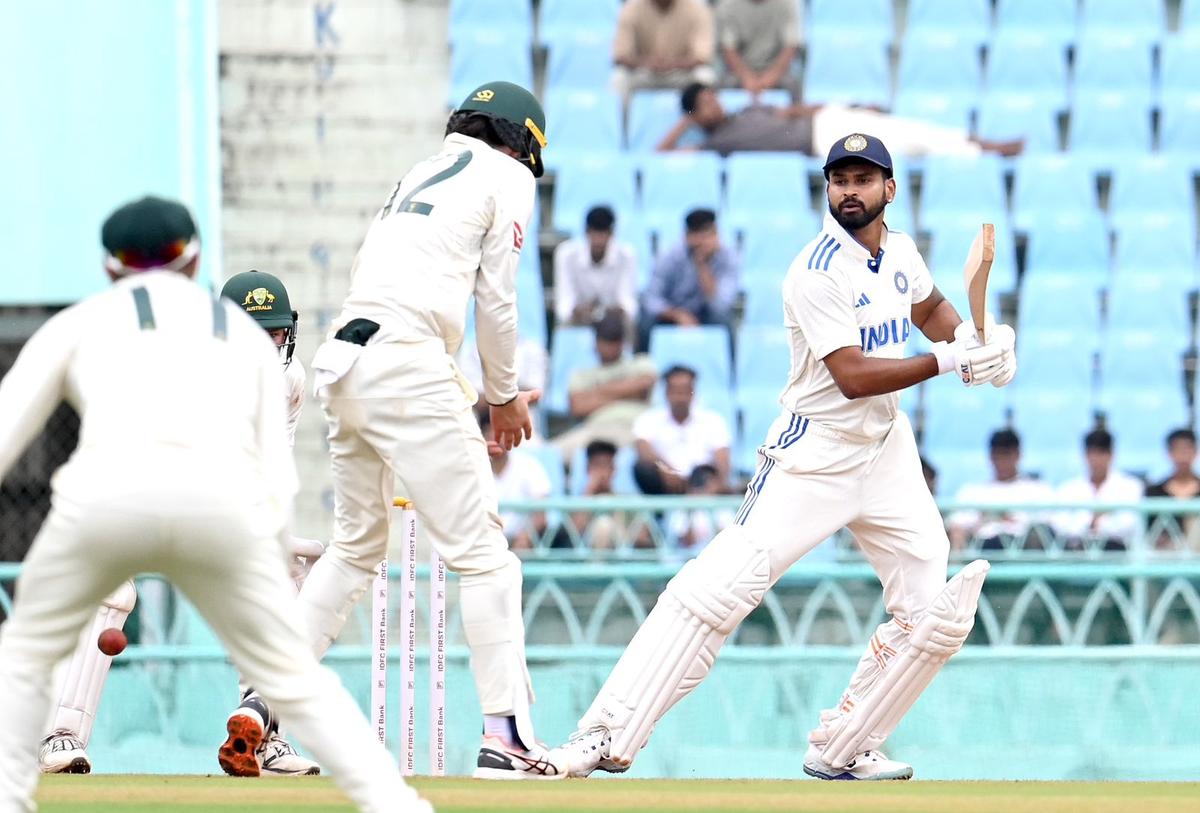
Iyer was named captain for the series but lasted just 13 balls in the series due to his recurring back issues.
| Photo Credit:
Tanuj Pandey/ UPCA

Iyer was named captain for the series but lasted just 13 balls in the series due to his recurring back issues.
| Photo Credit:
Tanuj Pandey/ UPCA
Discipline
If Padikkal made the breakthrough, Sai Sudharsan provided the confirmation. The Tamil Nadu southpaw topped the run charts with 248 and emerged as the most composed batter on either side. His game carries a stillness — compact in defence when needed, fluid through the off side once set, and unflinching across long innings. Even as the pitch slowed in the second match, Sudharsan remained unruffled, reinforcing his credentials as a player built for the long term.
The defining act, however, belonged to KL Rahul. His unbeaten 176, his first FC century in India since December 2016, during the second game’s mammoth chase of 412 was not about selection pressure but about rhythm and execution. Batting with trademark elegance, he combined patient defence with fluent strokeplay once set, guiding India A to the sixth-highest successful chase on Indian soil. For India’s Test opener, it was the perfect tune-up for a busy home season, a reminder of how senior players marry responsibility with flair.
Long-term investment
While the batters dominated, the bowlers had their moments. Left-arm spinner Manav Suthar relied on flight and subtle dip rather than pace, taking eight wickets by luring batters into mistakes. Gurnoor Brar, tall and brisk, generated bounce and seam movement that troubled even aggressive Australian batters. Though inconsistent at times — especially when banging it in short to natural pull hitters — Brar showed enough to be seen as a talent worth investing in.
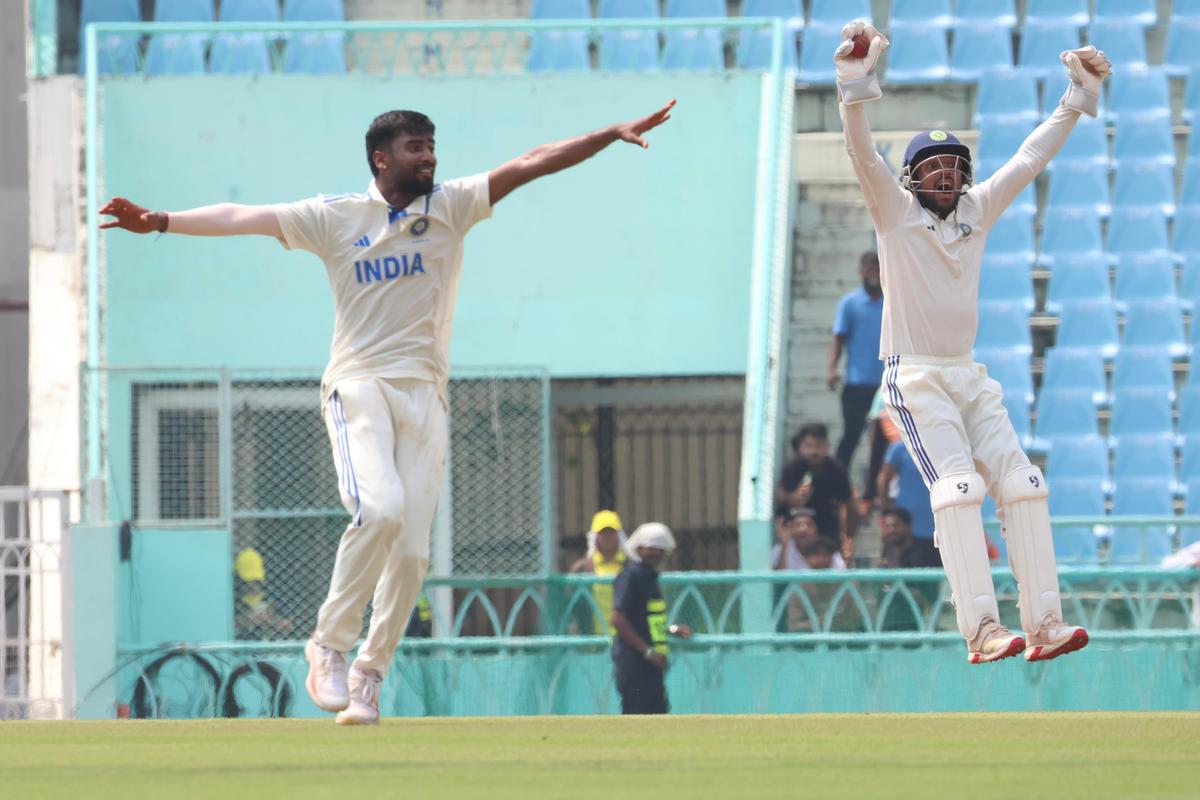
Manav Suthar (L) claimed eight wickets in the second Test with his left-arm spin.
| Photo Credit:
Tanuj Pandey/ UPCA
Manav Suthar (L) claimed eight wickets in the second Test with his left-arm spin.
| Photo Credit:
Tanuj Pandey/ UPCA
Dhruv Jurel wore two hats for India A: captain and middle-order batter. Tasked with leadership for the first time at senior level after Iyer’s departure, he didn’t look out of place, offering continuous suggestions and managing the field well. As a batter, he displayed versatility — attacking when needed, switching gears, and controlling the flow of play. His proactive knocks — 140 in the first match and 56 in the chase — reinforced the sense that Jurel could thrive as a specialist middle-order batter, not just as a wicketkeeper.
The series was equally vital for N. Jagadeesan after his call-up in England as a backup for the fifth Test. He justified his selection with elegance at the crease, striking well-timed drives and showing technique and temperament against both spin and pace, finishing with 138 runs across three innings. For Abhimanyu Easwaran, however, the series offered little change in fortune. He opened in the first match, scoring a tidy 44, but was once again sidelined in the second to make way for Rahul.
Nitish Kumar, still easing back from a knee injury, had a quiet series. After missing the first game, he returned in the second but played a restrained role — bowling only nine overs across two innings and contributing 17 runs with the bat.
Valuable experience
For Australia A, the series was equally important — immediate and long-term. With an eye on The Ashes later this year at home, Sam Konstas and Nathan McSweeney showed why they remain contenders for opening slots.
Konstas impressed with an attacking 109 in the first match, followed by a measured 49 in the second, demonstrating his ability to construct innings under pressure. McSweeney was the standout for Australia A, scoring 74 and an unbeaten 85 in the second game, blending composure with timing in challenging conditions.
Other Australian players were also on show for future tours. Head coach Tim Paine had emphasised the series as preparation for the 2027 Test tour of India. Off-spinner Todd Murphy, wicketkeeper-batter Josh Philippe, and all-rounder Cooper Connolly demonstrated skills and temperament that suggest they could return in whites soon. Philippe, in particular, adjusted well to the tempo of red-ball cricket, compiling 212 runs with a mix of aggression and patience — evidence he could be more than a white-ball specialist.
The pitches added another layer of intrigue. The first match was high-scoring, rewarding stroke-making and attacking intent. The second slowed slightly but never became treacherous, testing batters to adjust rhythm and shot selection. Australian batters often attacked rather than defended, forcing India A’s bowlers, who leaned too heavily on conventional “good areas,” to rethink their plans. The relentless heat and humidity tested all players, with umbrellas and towels frequently rushed onto the field.
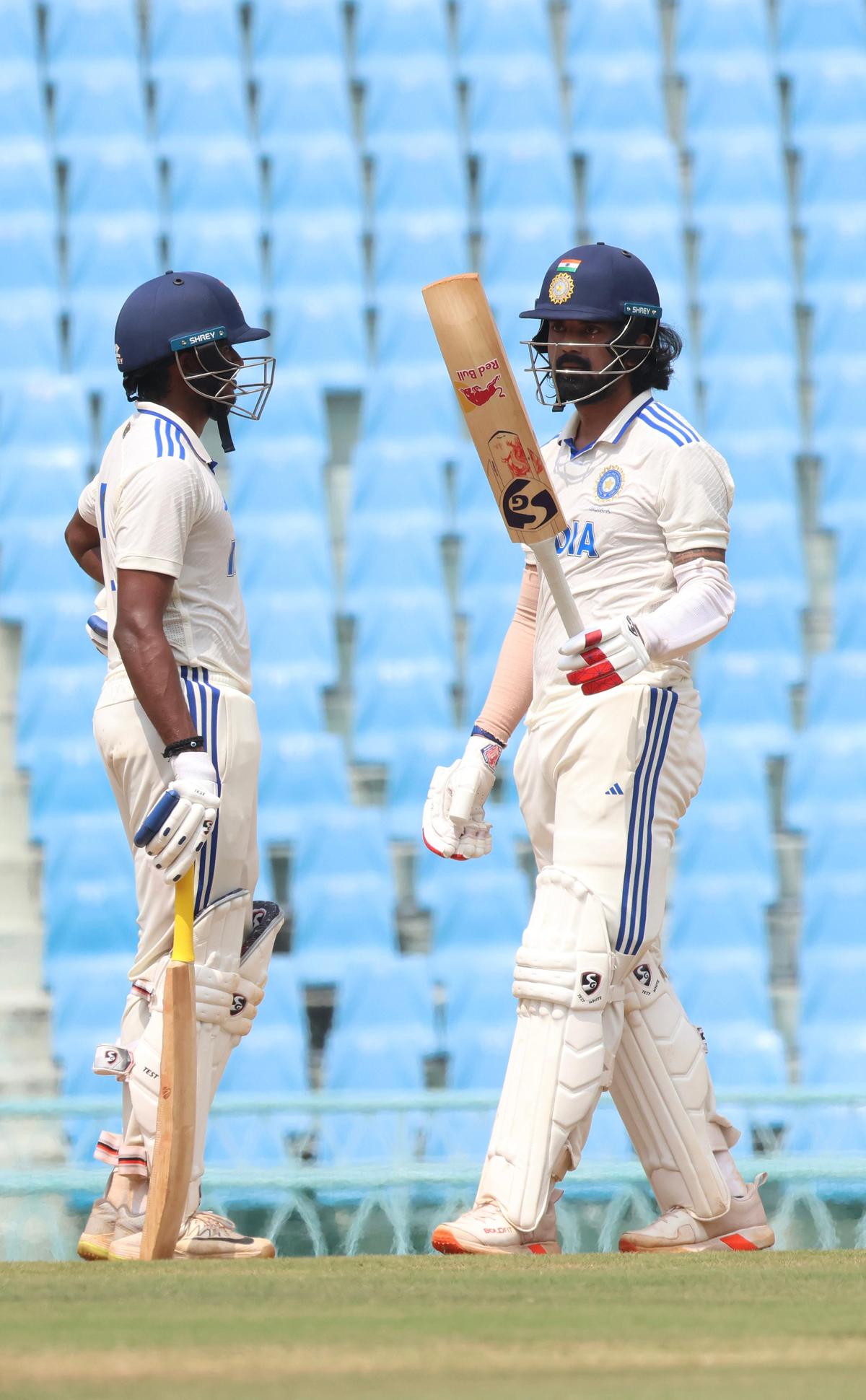
India A found reassurance through KL Rahul in the second Test, while Sai Sudharsan (L) provided confirmation by top-scoring in the series with 248 runs.
| Photo Credit:
Tanuj Pandey/ UPCA
India A found reassurance through KL Rahul in the second Test, while Sai Sudharsan (L) provided confirmation by top-scoring in the series with 248 runs.
| Photo Credit:
Tanuj Pandey/ UPCA
Challenging contests
In the bigger picture, the series served its purpose. India A found reassurance in Rahul, confirmation in Sudharsan and Jurel, and promise in Brar and Suthar. It also highlighted areas for growth, particularly the need for greater bowling intensity against fearless opponents. Australia, despite leaving without a win, gained invaluable experience. Philippe’s growth, McSweeney’s composure, and collective acclimatisation to Indian conditions will stand them in good stead for future subcontinental tours.
The 1–0 scoreline barely tells the story. Across two four-day games, India A and Australia A braved heat and humidity, trading moments of brilliance and flashes of vulnerability. What began as preparation became a proving ground for established stars, emerging talents, and anyone looking to stake a claim in the Tests to come.
Published on Sep 30, 2025