West Indies hadn’t won a Test in India since 1994, and not many had lofty expectations of Roston Chase and Co. to end this unceremonious streak.
It landed in India on the back of just two wins in its last 10 Tests, having endured a demolition at the hands of Australian pacers, and losing two ace quicks — Shamar Joseph and Alzarri Joseph — to injuries.
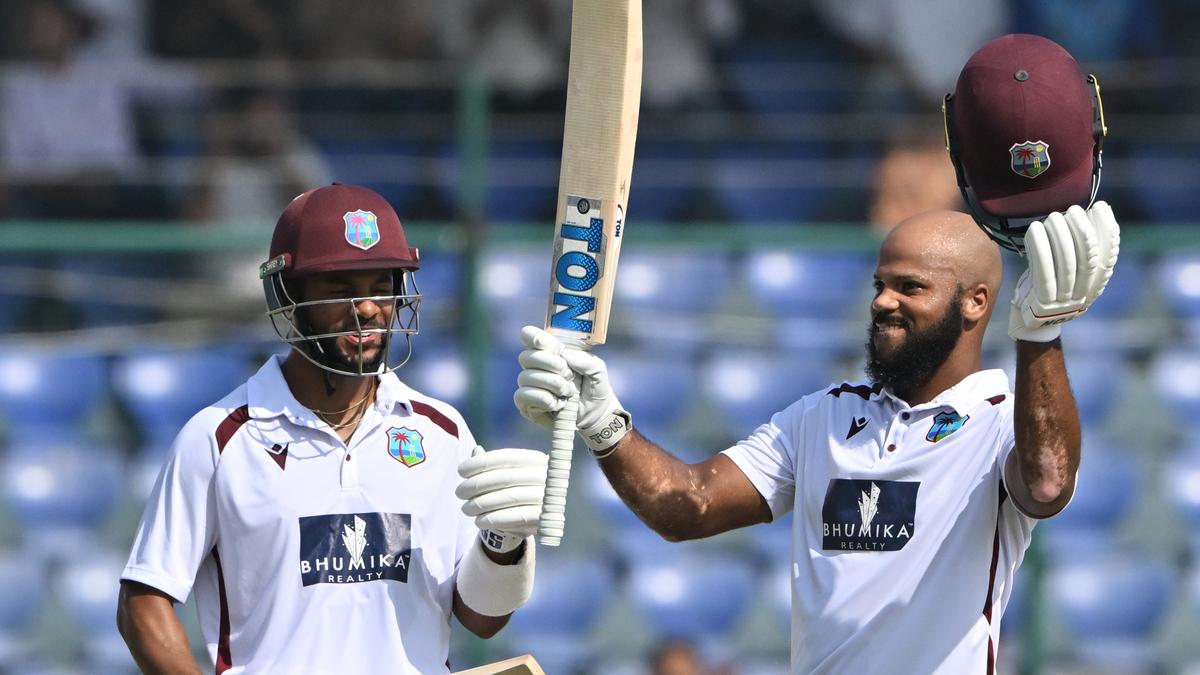
However, this was still a side desperate for a turnaround—not in fortune, but in morale. In this context, John Campbell and Shai Hope’s 177-run defiance that kept India’s bowlers at bay for a session and a half during the second Test in New Delhi was akin to the West Indies turning a corner.
Captain Chase had lamented his side’s propensity to fail to stick to basics for long enough and hand away advantages. Even after their heroics in the second Test, Hope and Campbell average 27 and 25, respectively, this year. But they offered a template for turning their team’s ailing form around, blending intent and attrition against a threatening spin attack.
Lower down the order, Justin Greaves emerged as a dependable batter who could usher in the change of intent. He gave glimpses of resolve against Australia and reinforced the order with a doughty fifty in the second innings in New Delhi.
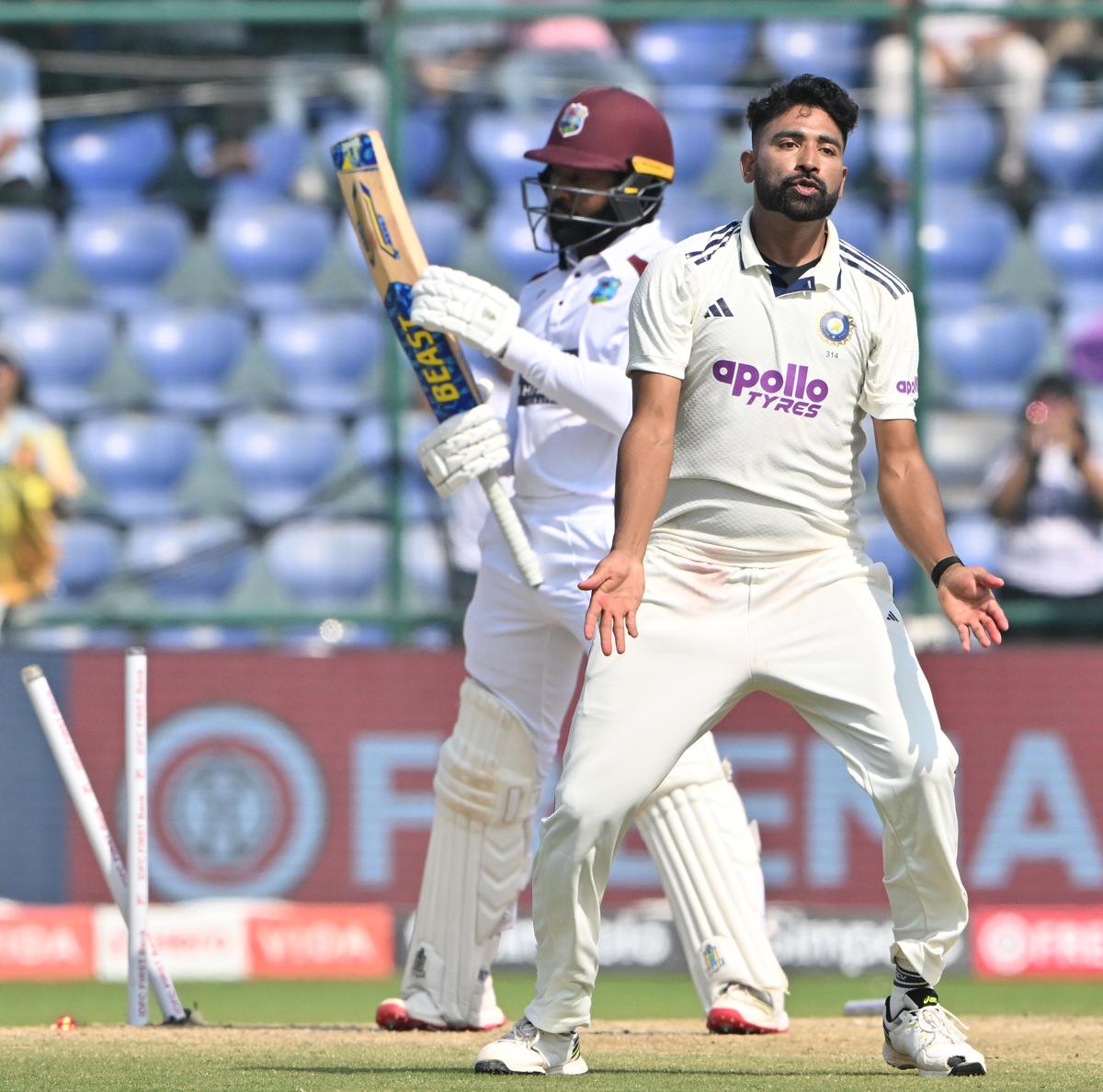
Fierce competitor: Mohammed Siraj nabbed 10 wickets at an average of just 13
| Photo Credit:
R. V. Moorthy

Fierce competitor: Mohammed Siraj nabbed 10 wickets at an average of just 13
| Photo Credit:
R. V. Moorthy
The remnants of their batting bravado were visible when West Indies took the field to defend 121 runs. With close-in catchers keeping India’s batters on their toes, West Indies looked far from the listless side that had meandered through its innings-and-140-run defeat in Ahmedabad. The aggression allowed Chase to prise out two wickets on the final morning, showing an obstinate refusal to give up.
The West Indies still lost the Test, but it showed it had the stomach for a fight. “I just want to see the guys continue in this vein and not let us go back to those ways. Even if it’s for us to lose, we have to lose in a good way, in a positive way, where we can have a lot of positives coming out of the game,” Chase said after the second match.
RELATED | Gambhir unhappy with Delhi pitch, says we could have had a better wicket
For its spinners, emulating the feats of their Indian counterparts was never on the roster. Chase and Jomel Warrican each ended with five wickets and averaged over 40. But the experience gained will hold Khary Pierre and Warrican in greater stead when West Indies visits Bangladesh and hosts Pakistan and Sri Lanka later in this World Test Championship cycle.
It would worry slightly less about its pace unit, which will be back to full strength for the New Zealand series in December this year. Greaves and Jayden Seales might have been left on their own, but this series was a lesson in accommodating and persisting in unyielding conditions.
“This first year in the cycle, we always knew, was going to be tough, with oppositions like Australia, India, and then New Zealand. But I think that once we learn from what we’ve done in these series and take it into the next year, where we have guys like Sri Lanka and Pakistan — teams that we are closer to in the rankings — I think that we can be more competitive,” Chase said.
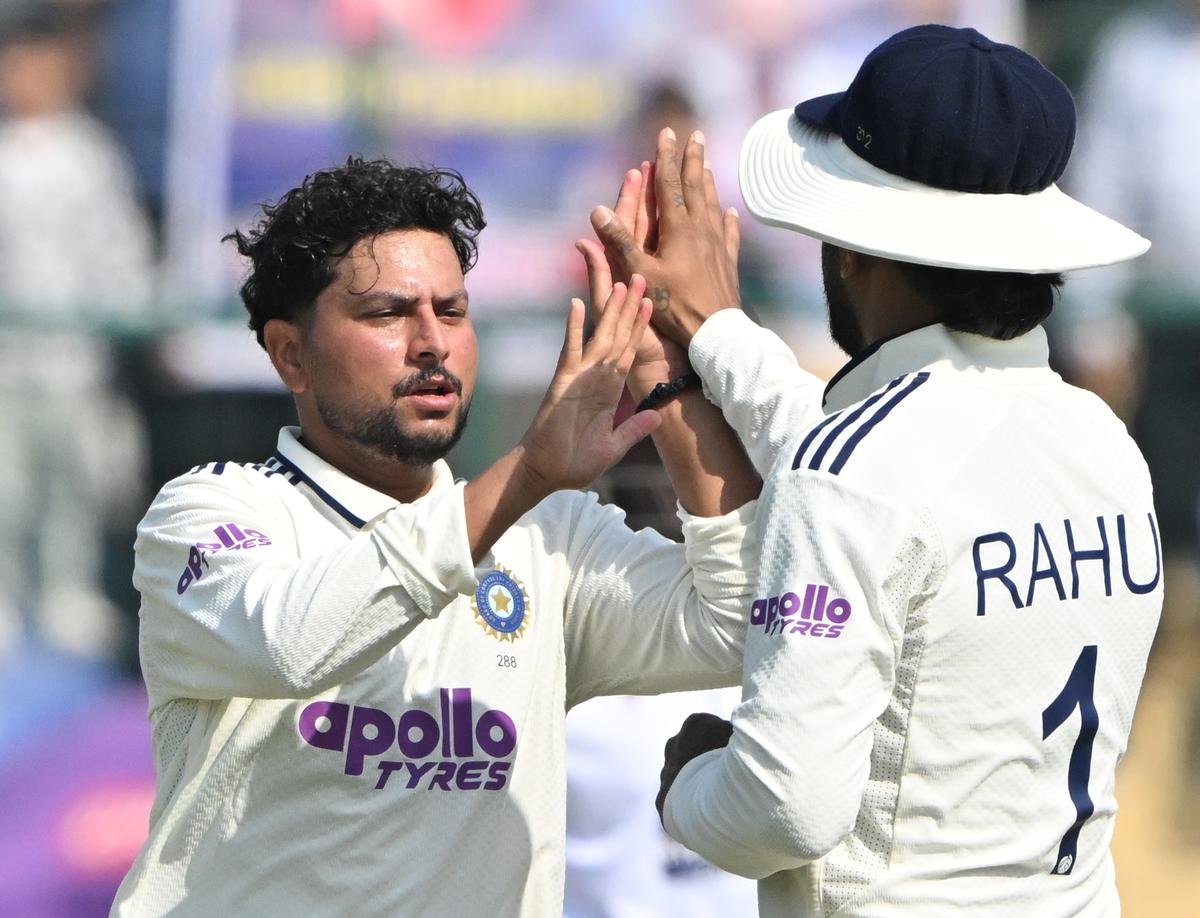
Star performer: Kuldeep Yadav’s haul of 12 wickets at an average of 19.50 was a highlight performance.
| Photo Credit:
R. V. Moorthy
Star performer: Kuldeep Yadav’s haul of 12 wickets at an average of 19.50 was a highlight performance.
| Photo Credit:
R. V. Moorthy
In the opposite camp, India’s display was reminiscent of its domination through the previous decade under the leadership of Virat Kohli. Its transition had survived the baptism by fire it faced in England, and the series sweep not only assured the process was in motion but also eased the memories of the New Zealand series reverse last year.
At the forefront was Kuldeep Yadav’s haul of 12 wickets at an average of 19.50. It might have been against a frail batting order, but it was a coming-of-age moment at a time India is looking to fill R. Ashwin’s void.
Mohammed Siraj is gradually stepping out of Jasprit Bumrah’s shadow. He nabbed 10 wickets at an average of just 13 despite bowling 17 deliveries fewer than his senior compatriot, who picked seven wickets at an average of 20. But with Bumrah, even taking the greater workload could be termed a win for India.
The only lingering predicament left for India is to zero in on its choice of all-rounder. Nitish Kumar Reddy was accommodated in the side at the expense of Axar Patel, who has 47 wickets in 12 home Tests at an average of 18. However, he was put to limited use despite India needing an additional bowler to share the load when it was made to bowl for nearly 200 overs in the second Test.
Against world champion South Africa and its more prolific batters, the faith in Nitish might not last, even if it costs the nurturing of a fourth seamer.
Published on Oct 14, 2025